
Evolution Merge - Eat and Grow
SayGames LtdArcade
4.51.01K Reviews
- Version
- 1.2.22
- Installs
- 10.00M
- Age Rating
- Everyone 10+
Screenshots

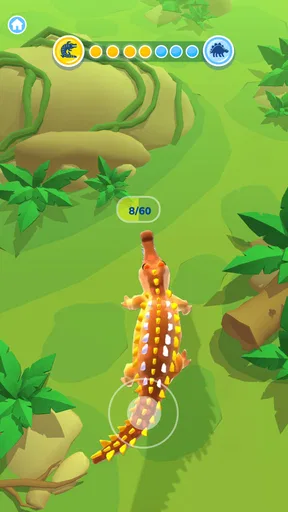
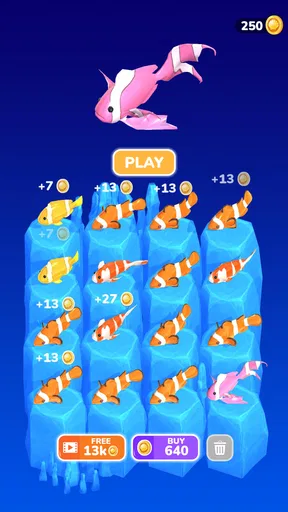

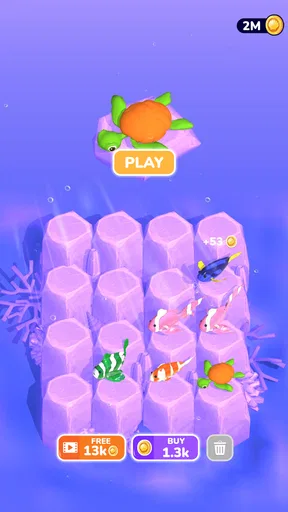



Our Review of Evolution Merge - Eat and Grow
 Analysis by Appyee
I approached Evolution Merge - Eat and Grow as a quick arcade game rather than a long-form strategy experience, and that distinction matters from the first few minutes. Its central idea is easy to understand: you guide a creature through a food chain where growing stronger never removes the danger around you. Something larger is still looking for its next meal, so every successful step creates a new target as well as a new threat. That simple tension gives the game its appeal.
Developed by SayGames Ltd, this free game sits in the arcade category and is available for players aged Everyone 10+. It has attracted a 4.5 average from around 177 thousand ratings and has passed 10 million installs, which fits its accessible, pick-up-and-play design. I would not choose it expecting a deep evolution simulator or a carefully layered management game. I would choose it when I want short bursts of movement, quick decisions, and a progression loop that is understandable without a tutorial-heavy commitment.
What to consider before choosing it
I’d use this section to help decide whether the game’s quick, risk-driven rhythm suits the way you actually play, rather than judging it by its premise alone. I’d also consider whether I’m happy returning to a focused loop in short bursts; that matters more here than setting aside a long session. With those preferences in mind, it becomes easier to see when a neighboring genre would be a better match.
The right question is whether you want quick growth or deep control
My first decision criterion is the kind of arcade session I want. This game works best when I have a few spare minutes and want something immediately readable. The food-chain premise gives each run a clear purpose: find what you can safely consume, grow, and avoid becoming food yourself. That is more focused than an open-ended casual game, but less demanding than an arcade title built around precise timing, complex combos, or long memorized stages.
The second criterion is how much repetition I can tolerate. The growth loop is satisfying because progress is visible and easy to understand, but the same basic appeal can become familiar if I play for a long stretch. I found it more enjoyable in short sessions than as a game I would keep open for an entire evening. If you like repeating a compact action loop while gradually feeling more capable, it has a good chance of fitting. If you need constant new rules, it may feel limited sooner.
The third criterion is pressure. The game’s hook depends on the food chain working both ways. I am not simply collecting harmless objects and watching a number rise; I have to think about what can consume me. That makes movement feel more meaningful than in a completely relaxed collector game. At the same time, players who dislike being punished for exploring or who prefer calm, predictable progress may find the threat-based design irritating rather than exciting.
Finally, I would consider whether I want a game that is easy to understand without becoming a serious planning exercise. The appeal is in making fast judgments, not in building a detailed long-term strategy. That makes it friendly for casual players, but it also sets a ceiling on how much depth I expect from it. I would treat it as a compact arcade distraction, not as a replacement for a full evolution, survival, or simulation game.
How the food-chain loop changes ordinary arcade play
Many arcade games ask me to dodge obstacles, collect items, or survive a timer. Here, the act of eating is tied directly to danger. Growing is useful, but it does not make the environment harmless. The more I engage with the progression loop, the more I have to respect the possibility that another creature is higher up the chain. That gives ordinary movement a small layer of judgment: I am not only asking what I can reach, but also whether reaching it leaves me exposed.
I found that the best way to play is to avoid treating every visible target as an invitation. A tempting item is not automatically worth the risk if it pulls me toward a more dangerous area. This is one of the game’s less obvious strengths: it rewards restraint as much as appetite. I made better progress when I paused briefly to read the situation instead of moving constantly toward the nearest opportunity.
Another useful habit is to think in terms of safe routes rather than isolated meals. When I focus only on the next thing to consume, I can accidentally place myself where the next threat has an easy approach. Looking one move beyond the immediate reward makes the game feel more deliberate without turning it into a complicated strategy title. That small change in mindset is what separates a satisfying session from a frustrating one.
Where it wins against familiar arcade alternatives
Compared with a pure endless runner, this game gives my actions a clearer relationship with progression. In a runner, the main satisfaction often comes from maintaining speed and avoiding hazards. Here, I am also weighing growth against vulnerability. That makes each encounter feel connected to the central theme instead of being just another obstacle in a lane.
Compared with a basic merge game, it adds more urgency. Merging usually encourages me to combine matching pieces at my own pace, while this experience places that growth idea inside a food-chain setting. I am not only organizing a board or waiting for a better combination; I am trying to become stronger while staying alive. Players who enjoy the visual satisfaction of evolution but want more immediate movement may prefer this format.
It also has an advantage over heavier survival games for casual use. I do not need to learn a broad crafting system, manage a large inventory, or commit to a lengthy world. The premise is direct enough to understand during a short break. That simplicity is a genuine win for accessibility, especially for someone who wants arcade action without a large ruleset.
Its strongest advantage is the clarity of its risk-and-reward idea. I always understand why growth matters and why caution matters. The game does not need a complicated story to make the next decision relevant. For me, that makes it a better fit than many loosely themed casual games where progression feels disconnected from what I am doing on screen.
Small tactics that make sessions more enjoyable
I recommend treating early progress as information gathering rather than rushing for maximum growth. The first moments of a session are useful for understanding the rhythm of the area and noticing which choices create danger. Even when the game feels simple, this approach helps me avoid wasting a promising run on an impulsive move.
I also try to leave myself an escape option. A target that can be reached only by moving into a narrow or exposed position is often a poor trade. The game becomes less about chasing every reward and more about preserving room to react. That is especially helpful when I am playing one-handed or while distracted, because a conservative route is more forgiving than a greedy one.
A third tip is to separate progress goals from entertainment goals. Sometimes I play to advance, and then I make safer choices. Other times I play simply to see how far the food-chain idea can take me, in which case I accept more risk. Knowing which mood I am in prevents me from judging a playful, aggressive session by the standards of a careful progression attempt.
I would also avoid assuming that bigger always means better in the immediate moment. Growth is the long-term objective, but the safest next move may be to reposition first. That trade-off is easy to miss because the game presents eating as the obvious reward. In practice, surviving long enough to find another opportunity can be more valuable than forcing one risky gain.
Where another type of game may fit better
For me, the useful comparison is not simply which game is more entertaining, but what kind of attention I want to give my phone at that moment. A food-chain arcade loop asks me to balance growth with danger, while other genres can prioritize calm planning, steady reflex tests, or deeper systems. Thinking about that trade-off makes the alternatives below more than a list of preferences.
When a merge-focused alternative is the better choice
If what I really enjoy is arranging pieces, planning combinations, and watching a board develop at my own pace, a traditional merge game may suit me better. Evolution Merge - Eat and Grow uses the language of growth, but its appeal comes from arcade movement and immediate danger. It is not the right pick for someone who wants a quiet puzzle session where every action can be considered without pressure.
A merge specialist is also a better option when I want progression that feels primarily organizational. In this game, the food-chain setting keeps attention on survival and consumption. That makes the experience livelier, but it means the satisfaction of combining or advancing is tied to action rather than careful board management. The choice depends on whether I want to react or arrange.
When an endless runner is more suitable
An endless runner may be preferable when I want a very consistent rhythm. Those games often make the goal immediately measurable through distance, timing, or obstacle avoidance. This title introduces a different kind of uncertainty because the central concern is not just where to move, but what can eat me and whether growth changes the danger around me.
I would choose the runner for a reflex-focused commute session where I want to concentrate on timing. I would choose this game when I want the extra thought of selecting opportunities in a changing food chain. Neither approach is universally better. They simply satisfy different kinds of short-session attention.
When a deeper survival game is worth the extra effort
Players looking for crafting, exploration, resource management, or a persistent world should look elsewhere. This game’s strength is that it removes that overhead. The trade-off is that it cannot offer the same sense of ownership or complexity as a larger survival experience. I would not recommend it to someone who wants to build a base, make detailed equipment decisions, or shape a world over many hours.
On the other hand, that lighter structure is exactly why I can recommend it to someone who finds full survival games exhausting. There is less preparation between the idea and the action. I can open it, understand the immediate objective, and start making decisions without first reviewing a large set of systems.
Advertising, purchases, and the cost of changing direction
The game is free to start, which lowers the barrier to trying it. It includes in-app purchases priced from $2.99 to $49.99 per item, so I would approach optional spending carefully and decide in advance whether I am comfortable paying to make the experience more convenient or enjoyable. The important point is that the free entry makes testing the core loop straightforward, while the available purchase range means I should not assume every part of the surrounding experience will remain equally frictionless.
My advice is to play several short sessions before spending anything. That gives me enough time to decide whether the food-chain loop itself is holding my attention, rather than confusing a temporary burst of novelty with lasting value. If I already know I prefer deep strategy or peaceful puzzle play, buying anything will not solve that mismatch.
The current version is 1.2.22 and requires Android 8.0 or later. That makes checking the operating-system requirement a sensible first step before planning a download, particularly on an older phone or tablet. The game is also available for iOS, so people who move between Apple and Android devices can consider it within the same general mobile arcade space, while still checking the relevant store page for device compatibility.
Switching away from it is easy if I decide the loop is too repetitive, but there is a small mental cost in changing expectations. A player coming from a merge puzzle may need to accept more movement and risk; a player coming from a runner may need to slow down enough to evaluate targets. I would give it a fair trial using the food-chain decision-making on its own terms rather than expecting it to behave like either neighboring category.
A realistic everyday use case
Imagine I have ten minutes before an appointment. I do not want to begin a story campaign, learn a complicated control scheme, or risk losing track of a long strategy session. This is where the game makes sense. I can play a compact arcade session, focus on finding growth opportunities, and stop when I need to put the phone away. The central rule is memorable enough that I can return later without relearning a large system.
It also works as a casual choice for someone who wants to share a simple game idea with a younger family member, while remembering that its Everyone 10+ rating still matters. The food-chain danger is easy to explain, and the basic objective does not require specialist gaming knowledge. I would still avoid presenting it as an educational evolution tool; the theme is used to support arcade decisions, not to teach biology in a detailed way.
Who should skip it
I would skip this game if I need a substantial narrative, a long-term character build, or a large world to explore. I would also skip it if repeated growth-and-risk encounters sound tiring rather than engaging. The same clarity that makes it approachable can make it feel narrow to players who want a constantly expanding set of mechanics.
It is not my first recommendation for someone who dislikes free-to-play structures in general, especially if the presence of optional purchases makes them uncomfortable. Nor would I choose it for a completely relaxing experience, because the food-chain premise depends on the possibility of being hunted. Even when the controls are approachable, the tension is part of the design.
My recommendation after weighing the trade-offs
I recommend Evolution Merge - Eat and Grow to casual arcade players who like visible progression, quick sessions, and a simple but meaningful risk decision. Its best quality is the way it turns growth into a double-edged choice: becoming stronger is satisfying, but the surrounding food chain never stops mattering. That gives the game more personality than a basic collector and more immediacy than a slow merge board.
I would keep expectations realistic. This is not a substitute for a full survival game, a deep merge puzzle, or a precision runner. Its value comes from being a focused middle ground: easy to start, active enough to hold attention, and thoughtful enough to reward caution. The main limitation is that the compact loop may lose its freshness during long sessions, especially for players who need frequent mechanical surprises.
For me, the final decision is straightforward: try it when I want a free mobile arcade game that I can understand quickly and play in short bursts, but stop before forcing it to become something it was not designed to be. The developer, SayGames Ltd, has built the experience around a clear idea rather than a complicated rulebook. If that idea of eating to grow while avoiding a larger predator sounds fun, the game is worth a look. If I want calm organization, deep systems, or a story-led adventure, another category will serve me better.
Verdict
Strengths of Evolution Merge - Eat and Grow
- Simple merge mechanics are easy to learn and work well for short play sessions.
- Creature evolution gives steady goals and makes progress feel rewarding.
- Bright visuals and playful animations make the game appealing to younger players.
- The game can be played offline, making it suitable for travel or low-connectivity areas.
- Frequent rewards help maintain momentum during the early stages of progression.
Limitations of Evolution Merge - Eat and Grow
- Later upgrades may require considerable grinding to collect enough resources.
- Repeated merging and feeding tasks can become monotonous over time.
- Some progression boosts may be tied to optional purchases or rewarded ads.
- The small play area can feel crowded as more creatures and objects appear.
- Battery usage may increase during longer sessions with animations enabled.
Other Releases by SayGames Ltd
View All
Turbo Stars - Rival Racing
Racing4.6

Johnny Trigger: Action Shooter
Action4.6

DOP 4: Draw One Part
Puzzle4.4

DOP: Draw One Part
Puzzle4.4
Similar Picks in This Category
View All
Subway Surfers
SYBO Games4.6

Stickman Party 234 MiniGames
PlayMax Game Studio4.6

Subway Princess Runner
Ivy4.4

Temple Run
Imangi Studios4.2

Zombie Tsunami
Mobigame SAS4.6

Stack Ball - Crash Platforms
CASUAL AZUR GAMES4.5
Frequently Asked Questions
What is Evolution Merge - Eat and Grow?
Evolution Merge - Eat and Grow is a casual progression game that combines merging mechanics with creature evolution. You collect or control organisms, combine matching units to create stronger forms, and advance through increasingly developed stages. The main appeal is its simple gameplay loop: merge, grow, unlock new evolutions, and repeat. It is designed for short play sessions and is easy to understand even if you have not played merge games before.
How do you play Evolution Merge - Eat and Grow?
The basic gameplay is centered on combining similar creatures or objects to produce an upgraded version. As your character evolves, it can usually consume or interact with smaller elements to gain progress and become more powerful. You need to manage available space, choose useful combinations, and decide when to merge rather than acting randomly. The controls are generally straightforward, making the game suitable for casual players who prefer relaxed, uncomplicated challenges.
Is Evolution Merge - Eat and Grow free to download and play?
The game is generally available as a free download, allowing you to begin playing without paying an upfront purchase price. However, free-to-play games may include advertising, optional in-app purchases, or other monetization features that can speed up progress or provide additional resources. Before downloading, it is worth checking the current store listing for exact purchase details, supported devices, and whether certain features require payment.
Does Evolution Merge - Eat and Grow require an internet connection?
Some parts of Evolution Merge - Eat and Grow may work without a continuous internet connection, which is convenient for playing during travel or when mobile data is unavailable. Nevertheless, online access can be needed for advertisements, cloud-related features, updates, event content, or restoring purchases. The exact offline functionality can depend on the version installed and the device, so players should not assume that every feature will remain available without connectivity.
Is Evolution Merge - Eat and Grow suitable for children?
The game uses colorful visuals, simple controls, and an accessible growth-based concept, so it may be appropriate for younger players depending on the age rating shown in the app store. Parents should still review the listing because advertisements, optional purchases, and external links may be included. If children use the game, enabling parental controls and purchase restrictions is recommended, especially when the device has a saved payment method.
Play our best games!


